
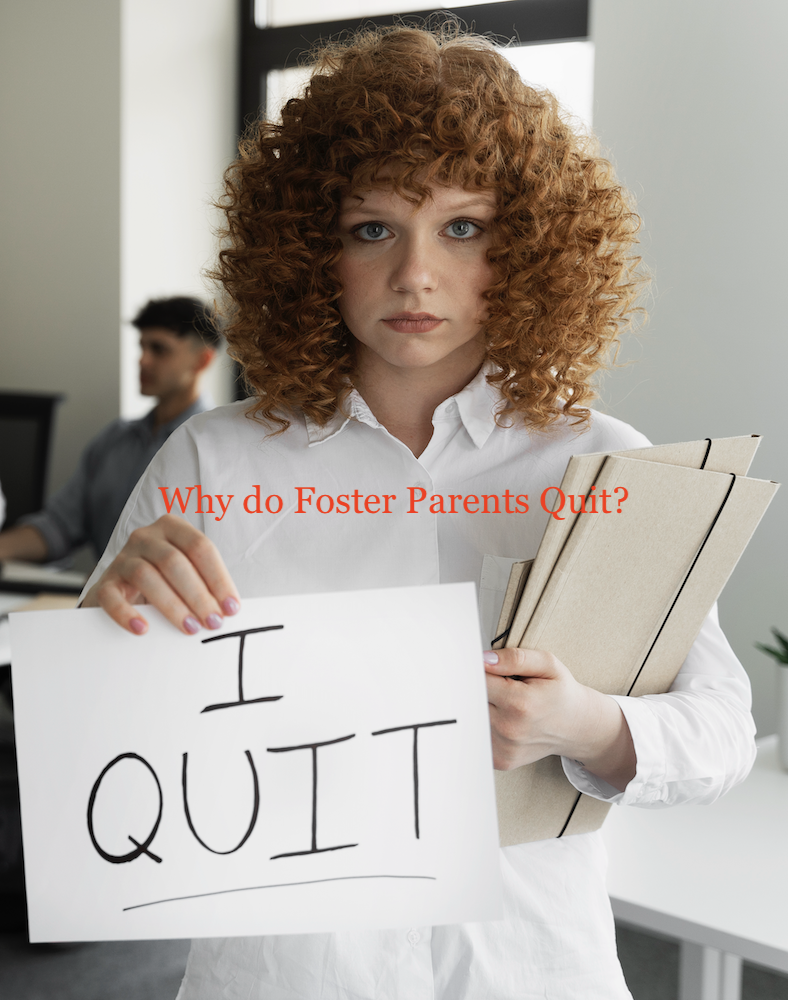

When a trained, licensed foster parent walks away mid-placement, the child in their care pays the highest price. Another move. Another goodbye. Another reminder that adults can’t always be counted on. That’s why the “why” behind foster parent attrition matters, and why the fix is worth the time of every state agency, private provider, and prospective foster parent.
This post summarizes what the research says about the reasons foster parents quit — and what can be done about it, from both sides.
The top reasons foster parents quit
A consolidated view of the literature — including Rhodes, Orme, and Buehler (2001), Hanlon et al. (2021), and interviews with exiting foster parents across multiple state reviews — points to a consistent set of reasons:
- Feeling excluded from decisions about the child. Foster parents spend more hours with the child than any other adult in the system, yet often feel left out of case plans, school meetings, and court. Being sidelined signals “we don’t trust you” — a corrosive message for people doing the heaviest lifting.
- Insufficient support for challenging behaviors. When a child is struggling, the foster parent needs a phone number that actually answers and a therapist who actually shows up. When that support is thin, the parent burns out.
- Slow or missing communication from caseworkers. High caseloads are a system problem, but the foster parent experiences them as being ignored. Weeks go by. Calls go unreturned. Trust erodes.
- Financial strain. The monthly stipend is meant to cover the child’s expenses; it rarely covers them fully. Foster parents who are already stretched thin have less margin for the unexpected.
- Burnout and secondary trauma. Caring for a child who has been through serious harm takes an emotional toll on the caregiver. Without respite and peer support, that toll accumulates.
- Placement mismatches. Children whose needs exceed what the foster family was prepared for — medical, behavioral, or age-related — create strain for everyone. The fix is better matching on the way in, not heroic coping afterward.
For state agencies and foster care providers
- Include foster parents in the child’s team. Invite them to case-plan meetings. Ask for their input on school placements, medical decisions, and visits. Respect what they see day to day.
- Make support real, not nominal. A 24/7 line that actually gets answered. Respite care that doesn’t require begging. Peer-mentor pairings for new foster parents.
- Communicate. Even a weekly “no updates” message is better than silence. Foster parents need to know the plan is moving.
- Match carefully. Rushed placements are false economy — a placement that disrupts after six months costs the child more than any recruitment shortfall would have.
- Recognize and thank. A note from the caseworker, a letter from the agency director, a yearly appreciation event. Foster parents are volunteers. Treat them that way.
For new and current foster parents
- Build trust with your caseworker early. Introduce yourself before there’s a crisis. Communicate often, in writing when possible.
- Use the supports that exist. Respite care, peer mentors, trauma-informed therapists, support groups. Ask for them.
- Protect your own wellbeing. Secondary trauma is real. Sleep, eat, see your own people. You cannot parent well on empty.
- Stay steady once a child is placed with you. If something is genuinely unworkable, talk to your agency before you hit the wall. Disruption is sometimes the right answer, but almost never the right first answer.
The stipend is for the child, not income. Foster parents are, in practice, volunteers with a support allowance. Treating them that way is the starting point for everything else.
StartFosterCare.org
Related reading
- Why Foster Parent Training Matters
- What Motivates Foster Parents?
- What Are the Expectations from Foster Parents?
Sources: Rhodes, Orme, and Buehler (2001), Social Service Review 75(1), 84–114; Hanlon et al. (2021), Families in Society 102(3), 285–299. Research summary. About StartFosterCare.org.